Colonial Spoon Bread Recipe
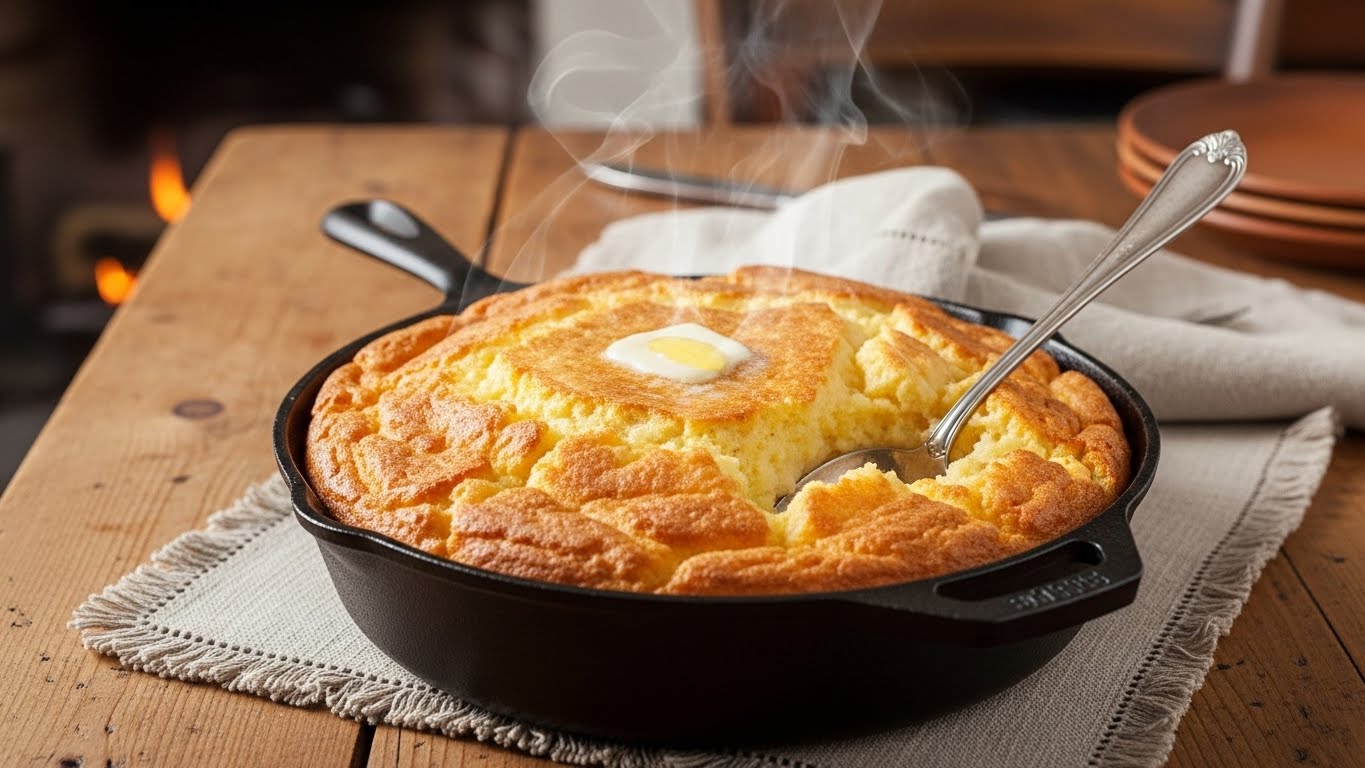
Soft, custardy, and infused with sweet corn flavor, Colonial Spoon Bread Recipe is the ultimate Southern comfort side dish with deep historical roots. This traditional recipe features a light, soufflé-like texture made from cornmeal, milk, eggs, and butter, baked until golden and slightly puffed. It’s the kind of dish that brings warmth to any table and connects you to centuries of American cooking traditions.
Each spoonful delivers a satisfying combination of textures—creamy on the inside, slightly crisp on top, with a delicate corn sweetness throughout. Whether you’re serving it alongside holiday turkey or pairing it with weeknight barbecue, this spoon bread is as versatile as it is comforting. Top it with your favorite additions like melted butter, honey, maple syrup, or even a drizzle of gravy for a customizable side that feels both nostalgic and special.
Why You’ll Love This Colonial Spoon Bread Recipe
- Historical comfort: A genuine taste of American colonial cooking that’s been beloved for generations.
- Versatile side dish: Works beautifully with everything from roasted meats to holiday feasts to simple weeknight suppers.
- Light and airy texture: Unlike dense cornbread, this has a delicate, almost pudding-like consistency that melts in your mouth.
- Simple pantry ingredients: Made with basic items you likely already have—cornmeal, milk, eggs, and butter.
- Impressive presentation: The golden, puffed top looks elegant enough for special occasions but easy enough for any day.
Preparation Phase & Tools to Use (Essential Tools and Equipment, Plus Why They Matter)
Before diving into this delicious Colonial Spoon Bread Recipe, having the right tools on hand will make everything smoother—from mixing to baking.
Essential Tools & Why You Need Them:
Medium Saucepan (2-3 quarts)
Essential for cooking the cornmeal mixture on the stovetop. A heavy-bottomed pan prevents scorching and ensures even cooking.
Large Mixing Bowl
You’ll need this for whisking eggs and combining all the ingredients before transferring to the baking dish.
Whisk
Critical for preventing lumps in the cornmeal mixture and incorporating air into the eggs for that signature light texture.
2-Quart Baking Dish or Casserole
This holds the batter perfectly and allows for even baking. A ceramic or glass dish works best for consistent heat distribution.
Measuring Cups & Spoons
Precision matters in this recipe—accurate measurements ensure the perfect texture every time.
Rubber Spatula
Ideal for scraping down the sides of bowls and folding ingredients gently without deflating the batter.
Having these items prepped and within reach makes the cooking process seamless and enjoyable.
Preparation Tips
- Butter the baking dish generously before adding the batter—this prevents sticking and creates a beautiful golden crust.
- Cook the cornmeal mixture slowly on the stovetop, stirring constantly to prevent lumps and ensure smooth texture.
- Separate eggs carefully if making a soufflé-style version—beaten egg whites add extra airiness.
- Let the cornmeal mixture cool slightly before adding eggs to prevent them from scrambling.
- Don’t open the oven door during the first 30 minutes of baking—sudden temperature changes can cause collapse.
- Serve immediately: Spoon bread is best enjoyed hot from the oven when it’s at its fluffiest and most impressive.
These small touches make a big difference in achieving that authentic colonial texture and flavor.
Ingredients for This Colonial Spoon Bread Recipe
Here’s everything you’ll need to bring this classic, comforting side dish to life. The ingredients are simple pantry staples that come together to create something truly special.
For the Spoon Bread:
- 1 cup yellow cornmeal (stone-ground preferred for authentic flavor)
- 3 cups whole milk (divided)
- 3 large eggs, separated
- 4 tablespoons unsalted butter, melted
- 1 tablespoon sugar (or honey)
- 1½ teaspoons baking powder
- 1 teaspoon salt
- ¼ teaspoon black pepper (optional, for savory version)
Optional Additions:
- ½ cup corn kernels (fresh or frozen)
- 2 tablespoons fresh herbs (chives, thyme, or parsley)
- ½ cup shredded cheddar cheese
- 2 tablespoons diced jalapeños (for a spicy kick)
- 1 tablespoon bacon drippings (substitute for some butter)
Optional Toppings:
- Extra melted butter
- Pure honey or maple syrup
- Sausage gravy
- Fresh herbs for garnish
- Cracked black pepper
- Whipped honey butter
Everything in this list works together harmoniously—the cornmeal provides structure, the eggs create airiness, and the butter adds richness. The toppings are optional but enhance the traditional experience.
Step 1: Prepare the Cornmeal Base
In a medium saucepan, bring 2 cups of milk to a gentle simmer over medium heat. Gradually whisk in the cornmeal in a slow, steady stream, stirring constantly to prevent lumps. Reduce heat to low and continue cooking, stirring frequently, for 5-7 minutes until the mixture thickens to a porridge-like consistency.
Remove from heat and stir in the melted butter, sugar, salt, and pepper if using. Let the mixture cool for about 10 minutes to prevent the eggs from cooking when added.
Step 2: Incorporate the Eggs
In a large mixing bowl, whisk the egg yolks with the remaining 1 cup of milk until well combined. Slowly pour the warm cornmeal mixture into the egg mixture, whisking constantly to incorporate smoothly.
In a separate clean bowl, beat the egg whites with a hand mixer until they form soft peaks. Gently fold the beaten egg whites into the cornmeal mixture using a rubber spatula, being careful not to deflate them. This creates the signature light, airy texture.
Step 3: Add Leavening and Mix
Sprinkle the baking powder over the batter and gently fold it in with a few strokes. Don’t overmix—a few lumps are perfectly fine. If using any optional additions like corn kernels, cheese, or herbs, fold them in now.
Step 4: Prepare for Baking
Preheat your oven to 375°F (190°C). Generously butter a 2-quart baking dish or casserole. Pour the batter into the prepared dish, smoothing the top gently with a spatula. The batter should fill the dish about three-quarters full to allow room for rising.
Step 5: Bake to Golden Perfection
Place the baking dish in the preheated oven and bake for 40-45 minutes, or until the top is golden brown and slightly puffed, and a knife inserted in the center comes out mostly clean with just a few moist crumbs. The spoon bread should jiggle slightly in the center but be set around the edges.
Remove from the oven and let rest for 5 minutes before serving. The texture will be soft and spoonable—hence the name. Serve hot with your choice of butter, honey, or gravy spooned over the top.
Notes
Texture Variations: For a denser, more cornbread-like texture, skip separating the eggs and simply whisk them whole into the batter.
Sweetness Level: Adjust the sugar to taste. Traditional versions are only slightly sweet, but you can increase it for a dessert-like side.
Make-Ahead Option: While best served fresh, you can prepare the cornmeal base ahead and add eggs just before baking.
Watch Out for These Mistakes While Cooking
- Adding cornmeal too quickly: Dumping it all at once creates stubborn lumps. Always add gradually while whisking constantly.
- Using cold milk with hot cornmeal: Extreme temperature differences can cause curdling. Warm the milk first for smoothest results.
- Overbeating the egg whites: Stiff peaks make the batter difficult to fold and can create a dry texture. Aim for soft, glossy peaks.
- Forgetting to butter the dish: Without proper greasing, the delicate spoon bread will stick and fall apart when serving.
- Overmixing after adding egg whites: Vigorous stirring deflates all that carefully incorporated air and results in a dense, heavy texture.
- Baking at too high temperature: This causes the outside to cook too quickly while the center remains raw. Stick to 375°F.
- Opening the oven door repeatedly: Each peek releases heat and can cause the puffed top to collapse dramatically.
- Not letting it rest before serving: A brief resting period allows the texture to set slightly, making it easier to spoon out.
What to Serve With Colonial Spoon Bread Recipe?
This soft, comforting side dish pairs beautifully with a wide variety of main courses, from traditional Southern fare to holiday classics. Here are some perfect companions for your spoon bread.
8 Delicious Recommendations:
Roasted Turkey or Chicken
The mild sweetness of spoon bread complements roasted poultry perfectly, especially during Thanksgiving or Christmas.
Braised Short Ribs
Rich, tender beef with deep gravy flavors pairs wonderfully with the light, corny texture.
Honey-Glazed Ham
The sweet and savory combination creates a harmonious holiday plate that feels complete.
Southern Fried Chicken
Crispy, seasoned chicken alongside creamy spoon bread is pure comfort food magic.
Collard Greens or Turnip Greens
Traditional Southern greens with pot liquor balance the richness and add nutritional value.
Barbecue Pulled Pork
Smoky, tangy pork finds its perfect partner in this subtly sweet, corn-based side.
Black-Eyed Peas or Baked Beans
Earthy legumes complement the corn flavor and create a satisfying vegetarian-friendly meal.
Sausage Gravy
Pour creamy sausage gravy over warm spoon bread for an indulgent breakfast or brunch option.
These pairings help round out the meal and showcase the versatility of this historic dish.
Storage Instructions
Colonial Spoon Bread Recipe is best enjoyed fresh, but leftovers can be stored and reheated with good results.
How to Store:
Refrigerator: Allow the spoon bread to cool completely, then cover the baking dish tightly with plastic wrap or aluminum foil. It will keep in the fridge for up to 3 days.
Freezer: Freezing is not recommended for this recipe, as the delicate custard-like texture doesn’t hold up well to freezing and thawing.
Reheating:
Oven: Reheat covered with foil at 325°F (165°C) for 15-20 minutes until warmed through. This method preserves texture best.
Microwave: Heat individual portions on medium power for 1-2 minutes. The texture will be softer and less fluffy than fresh.
Always ensure internal temperature reaches 165°F (74°C) when reheating.
Estimated Nutrition (Per Serving – Based on 8 Servings)
Please note this is an approximate breakdown and may vary based on exact ingredients used.
| Nutrient | Amount Per Serving |
|---|---|
| Calories | 195 |
| Protein | 7g |
| Carbohydrates | 20g |
| Dietary Fiber | 2g |
| Sugar | 5g |
| Total Fat | 10g |
| Saturated Fat | 5g |
| Unsaturated Fat | 4g |
| Trans Fat | 0g |
| Cholesterol | 95mg |
| Sodium | 380mg |
This dish provides a satisfying side with moderate calories and good protein from eggs and milk—perfect alongside hearty main courses.
Frequently Asked Questions
1. Can I make Colonial Spoon Bread Recipe ahead of time?
You can prepare the cornmeal base up to a day ahead and refrigerate. Add the eggs and bake just before serving for the best texture and rise.
2. Can I use different types of cornmeal?
Yes! Stone-ground cornmeal gives the most authentic, rustic texture, but regular fine or medium-grind cornmeal works perfectly fine.
3. Why is it called spoon bread?
The name comes from its soft, custard-like texture that requires a spoon to serve rather than slicing like traditional cornbread.
4. Can I make it without separating the eggs?
Absolutely. Simply whisk whole eggs into the batter. The texture will be slightly denser but still delicious and authentic to many traditional recipes.
5. What’s the difference between spoon bread and cornbread?
Cornbread is firm and sliceable, while spoon bread has a soft, soufflé-like texture similar to corn pudding that must be spooned from the dish.
6. Can I make this gluten-free?
This recipe is naturally gluten-free as long as you ensure your baking powder and cornmeal are certified gluten-free with no cross-contamination.
7. Can I double the recipe for a crowd?
Yes! Use a larger baking dish (9×13-inch) and increase baking time by 10-15 minutes. Check for doneness with a knife test.
8. How do I know when it’s done baking?
The top should be golden brown and slightly puffed, with just a gentle jiggle in the center. A knife inserted should come out with moist crumbs but no liquid batter.
Conclusion
Colonial Spoon Bread Recipe is the ultimate taste of American culinary history—a dish that has graced tables from colonial times to modern celebrations. With its delicate texture, subtle corn sweetness, and impressive presentation, it’s a side dish that truly stands out.
Perfect for holiday gatherings, Sunday dinners, or any meal that deserves something special, this spoon bread bridges the gap between rustic tradition and elegant simplicity. Plus, with endless serving and flavoring options, it adapts beautifully to your personal taste. So grab your baking dish and bring this timeless classic to your table.